From Brasília to Belém: Why COP30 Must Center Rights, Resilience & Reproductive Justice in the Climate AgendaGlobal Sympossium ahead of COP 30
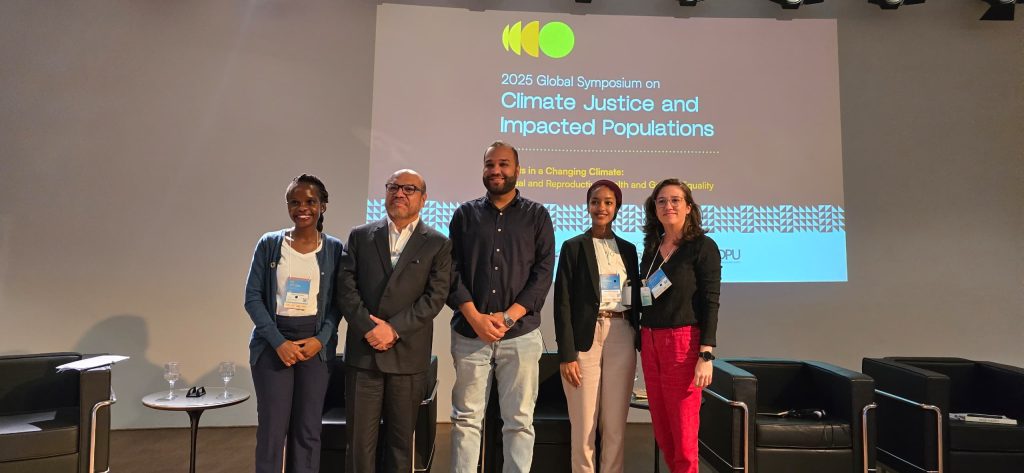
Brasília, Brazil — From July 28 to 31, the 2025 Global Symposium on Climate Justice and Impacted Populations convened in Brazil’s capital, setting the stage for urgent dialogue ahead of COP30 in Belém. In attendance were government delegates, civil society representatives, economists, and climate and gender experts from the Bahamas, Bangladesh, Brazil, Colombia, Ethiopia, India, Italy, Kenya, Malawi, Nigeria, Panama, Philippines, Sierra Leone, South Africa, South Sudan, Sri Lanka, the United States, Zimbabwe, and beyond. Some netizens zoomed into the symposium. Imali Ngusale the lead strategist at the African Center for Health, Climate & Gender Justice Alliance (ACHCGA) moderated a session on Social Protection, Alternative Livelihoods, and Climate Resilience. Speaking during the session, Hugo Rolando Nopo Aguilar, Senior Economist at the World Bank, emphasized the urgency of the moment:, “Brazil is one of the countries most prone to natural disasters,” he noted, “and the time to strengthen resilience is now.”Accordingly, Mohamed Ageez, Youth Participation Officer, UNFPA ASRO, stated that climate change remains the most significant environmental challenge of our era.” Ageez admitted that climate change disproportionately impacts those least responsible for it, citing that women and girls, particularly in low-income nations, face heightened risks from extreme weather events.” Accordingly, Augustus Lito M. Narag, EnP, Officer In Charge, Director for Mindanao Affairs and Concurrent Director for Data Management and Systems, Pantawid Pamilyang Pilipino Program (4Ps) on Conditional Cash Transfer in the Philippines, made a presentation that revealed that gender-based violence is exacerbated by climate change. Narag, also said that climate change disrupts access to sexual and reproductive health services and deepens economic inequities. Markedly, participants from Brasília, policymakers, climate scientists, health experts, youth leaders, and civil society activists who attended the session admitted that climate action needs to prioritize human rights and resilience. While addressing a panel on Social Protection, Thais Lemos Ribeiro, Coordinator of Education in Human Rights and the Environment at the Ministry of Human Rights and Citizenship, said that “Climate change is not just an environmental crisis, it’s a human rights crisis.” Ribeiro insisted that while many discussions focus mainly on combating climate change, the dignity, health, and choices of millions, especially women and young people, need to be prioritized.” Notably, Bothaina Eltigani, a PhD student at Oxford University, said that “We are responsible for ensuring their voices drive the solutions.” Eltigani underscored that climate solutions should not just be regurgitated in summits but implemented in grassroots places. The symposium was a strategic milestone on the road to COP30, which also comes three decades after the landmark International Conference on Population and Development (ICPD) and the UN Framework Convention on Climate Change. The symposium builds on the 2030 Agenda for Sustainable Development, emphasizing that climate justice must uphold sexual and reproductive health, combat gender-based violence, and dismantle harmful practices. Whether all the aforementioned will explore gaps in research, showcase rights-based adaptation strategies, and push for stronger partnerships to finance climate-resilient health systems will only be told in the sands of time.