Leadership

From the Ashes of Sharm el Sheikh to the Santiago Network

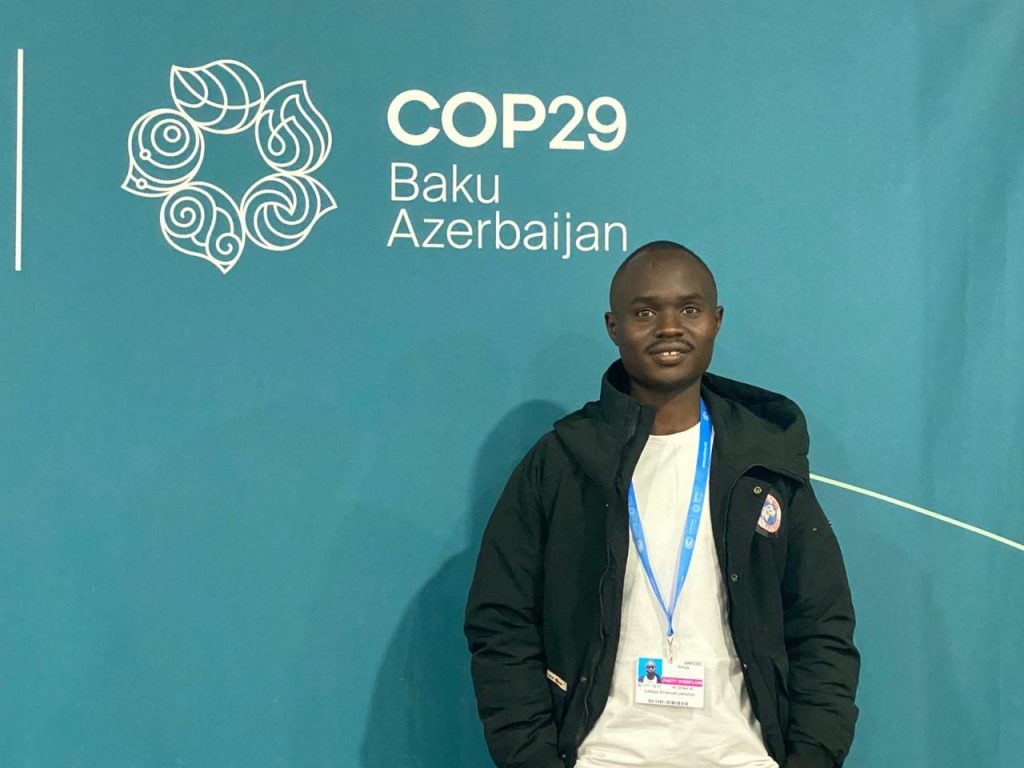
There is a particular kind of rage that lives quietly in the chest of a child who has watched the only thing her family ever owned — a small plot of land, a few goats, a mud-walled home — be swallowed by floodwaters that science says were made three times more likely by a planet warming at the hands of others. She did not cause this. Her country did not cause this. And yet she is standing in the wreckage, barefoot, with nowhere to go and no one who has been made to answer for it. It was precisely to document and amplify that rage — and to transform it into policy — that the African Center for Health, Climate & Gender Justice Alliance (ACHCGA) began its extraordinary journey into the world’s most complex climate negotiations. What follows is the story of that journey: from a seaside conference hall in Egypt to the corridors of the Santiago Network, and from the Amazon rainforest of Brazil to the cold bureaucratic chambers of Baku, Azerbaijan. It is a story about an NGO that refused to be a bystander. The Spark: Sharm el-Sheikh, 2022 It started, as so many movements do, with an act of deliberate courage in an unlikely place. At COP27 in Sharm el-Sheikh, Egypt, ACHCGA launched its Loss and Damage campaign in close collaboration with UNFPA — the United Nations Population Fund. The air in Sharm el-Sheikh that year was electric with expectation; developing nations had spent years demanding that wealthy, high emitting countries acknowledge and compensate for climate-induced destruction. And for the first time, the world was listening.   But ACHCGA did not arrive merely to observe. The organization brought something that no delegation of diplomats could replicate: a child ambassador — a young Kenyan whose presence on the world stage put a human face on the sterile phrase “loss and damage.” This child stood not as a symbol, but as a frontliner documenting, in real time, what climate-induced loss looks like when it strips a community of its crops, its coastline, its culture. “Climate change is not just an environmental crisis — it is a human rights crisis. And behind every statistic is a child who never got to choose the world she was born into.” ECHOED AT THE BRASÍLIA GLOBAL SYMPOSIUM, JULY 2025 Alongside this powerful debut, ACHCGA forged a vital intellectual partnership with the Loss and Damage Collaborators — a consortium of researchers and advocates — to understand what the priorities for loss and damage look like from the perspective of the Global North, and how those priorities diverged, often sharply, from the lived realities of communities in Africa. That gap between Geneva and the grassroots became ACHCGA’s map. A World Tour in the Name of Justice From Sharm el-Sheikh, ACHCGA’s journey did not slow — it accelerated. The organization’s footprint grew to span continents, negotiations, and national policy tables. Each stop on the road deepened both its expertise and its conviction. BAKU, AZERBAIJANCOP29Into the Heart of Global Climate Negotiations In partnership with Kenya’s Climate Change Directorate and with sponsorship from UNFPA, ACHCGA participated in the international climate negotiations on loss and damage in Baku. For a Kenyan NGO to hold space in those rooms — alongside nation states, multilateral institutions, and powerful lobbying blocs — was no small thing. ACHCGA brought the voice of community; it left with the language of policy. NAIROBI , KENYANATIONAL LEVELChampions Born at Home: Youth Climate Capacity Building The global stage matters. But so does the school hall in Nairobi. ACHCGA brought its negotiations experience home, contributing to capacity development for youth climate champions across Kenya — building the next generation of advocates who would carry the loss and damage argument into communities, county governments, and national policy forums. B RASÍLIA, BRAZILPRE-COP30 AMAZONIA CONFERENCEFrom the Savanna to the Amazon Invited by both UNFPA ESARO and UNFPA Brazil, ACHCGA attended the landmark Pre-COP30 Amazonia Global Symposium on Climate Justice and Impacted Populations, held in Brazil’s capital from July 28–31, 2025. The event, co-hosted by UNFPA and the Government of Brazil, convened government delegates, civil society, economists, and health experts from over twenty nations. It was here that ACHCGA’s Strategic Lead, Imali Ngusale, moderated a pivotal session, sitting alongside a World Bank senior economist who noted bluntly that the poor in Brazil are disproportionately crushed by natural disasters, and that Latin America and the Caribbean faces its steepest poverty increases from climate events. The session affirmed what ACHCGA had long known: across continents, it is always the already-vulnerable who inherit the worst of a crisis they did not create. The BIM Moment: Kenya Domesticates the Global Compact In late 2025 and early 2026, ACHCGA became part of something historic on its own soil. The organisation was among a small, select group of NGOs invited to a landmark national process: the operationalization of the Barbados Implementation Modalities (BIM) — the framework that governs how global loss and damage commitments under Article 8 of the Paris Agreement will actually translate into support for vulnerable communities.   Around the table sat an extraordinary assembly: professors and disaster management experts from Masinde Muliro University, county governments from Kisumu, Turkana, and Busia, the National Environment Management Authority (NEMA), KIPPRA, the State Department of Gender and Affirmative Action, the National Treasury, Egerton University, the NDC Partnership, the National Social Protection Secretariat, UNFPA, and climate directors from Turkana, Marsabit, Kisumu, and Nakuru Counties. What the BIM Means — and Why It Matters The Barbados Implementation Modalities are not abstract diplomatic language. They are the operational blueprint for how the Fund for Responding to Loss and Damage will reach communities that have suffered — and continue to suffer — from climate impacts they did not cause. Critically, the BIM establishes that support will be needs-based and capped, with defined priorities for the most climate-vulnerable countries. For Kenya — battling intensifying floods in the west, prolonged drought in the north, and coastal erosion along its Indian Ocean shoreline — this

From the Ashes of Sharm el Sheikh to the Santiago Network Read More »
Kenya’s Embassies Should Be Seen as Economic Institutions, Not Administrative Offices

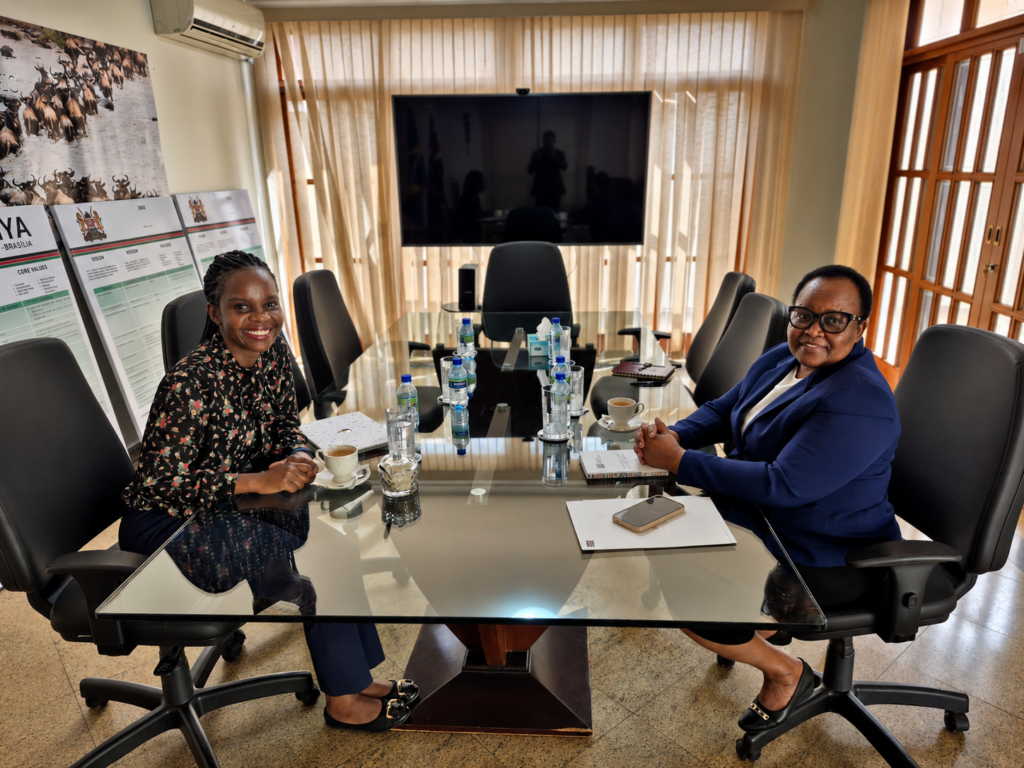
The Embassy of Kenya in Brasília demonstrated that modern diplomacy extended far beyond consular services by positioning itself as a catalyst for Kenya’s economic, environmental, and development agenda. Through strategic engagement with Kenyan institutions and international partners, the Embassy reinforced its commitment to advancing Kenya’s Vision 2030 while strengthening the country’s voice in global climate action. This leadership was evident when the Embassy hosted Imali Ngusale, Strategic Lead and founder of the African Center for Health, Climate & Gender Justice Alliance (ACHCGA), a Kenyan organization partnering with the United Nations Population Fund (UNFPA). The engagement reflected the Embassy’s continued commitment to supporting Kenya’s meaningful participation in Brazil and expanding opportunities for collaboration in areas critical to sustainable development. The discussions focused on how diplomacy could unlock partnerships that support Kenya’s climate ambitions, promote innovation, and connect Kenyan expertise with international institutions. Furthermore, they explored avenues for supporting Kenyan youth in diplomacy and climate leadership, as well as strengthening Kenya-Brazil ties in environmental education, green innovation, and inclusive policy. The meeting also showcased how civil society complemented national development priorities. Through its work on climate justice, public health, gender equality, and community resilience, ACHCGA continued to demonstrate the objectives of Kenya’s National Climate Change Action Plan (NCCAP) 2023–2027. The organization’s initiatives supported climate adaptation, strengthened resilience among vulnerable communities, promoted inclusive participation in climate governance, and advanced locally driven solutions aligned with Kenya’s long-term development agenda. As the race for climate finance and international partnerships intensifies, the Embassy’s leadership highlighted the growing importance of diplomatic missions as bridges between government, development partners, academia, and civil society. Through facilitating these connections, the Kenyan Embassy in Brasilia helped position Kenya as a credible partner in global climate and development discussions. The engagement underscored a broader reality achieving Vision 2030 depended not only on domestic investments but also on effective diplomacy that expanded partnerships, attracted knowledge, and created opportunities for Kenyan institutions to shape international solutions. In Brasília, the Embassy demonstrated that diplomatic leadership remained a strategic pillar of Kenya’s sustainable development journey.

Kenya’s Embassies Should Be Seen as Economic Institutions, Not Administrative Offices Read More »

RHNK 2025: Youth Power, Gender Justice, and Unapologetic Leadership

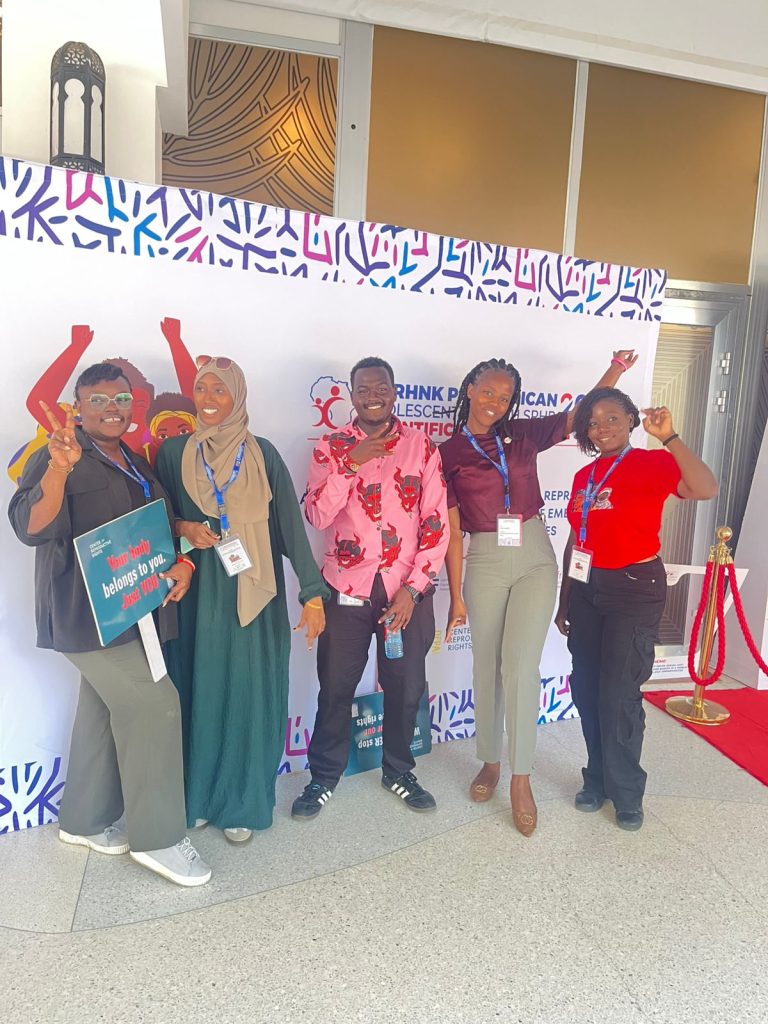
Mombasa, Kenya – The 2025 Reproductive Health Network Kenya (RHNK) Conference erupted with energy, uniting young advocates, policymakers, and experts under the bold theme: Adolescents and Youth Sexual and Reproductive Health and Rights (AYSRHR) in a World of Emerging Threats and Opportunities. The session attracted hundreds of participants from different organizations in Kenya and some East African countries. Speaking during the opening sessions UNFPA Kenya’s Pilar de la Corte Molina said, “There is an urgent need to prioritize adolescent and youth sexual and reproductive health and rights in a world grappling with climate change, online dangers, and deep-rooted inequalities.” Accordingly, Rosebell Barbara from the African Center for Health, Climate & Gender Justice Alliance (ACHCGA) reiterated the need for unpacking the dangers involved in online engagements. Barbara said,” The time for young people’s views on sexual reproductive health to be taken into consideration has come.”“Young people make -up almost 70 percent of Kenya’s population and it is crucial that they are engaged in the decision-making processes on health,” added Barbara. On the second day of the conference Rosebell Barbara made a compelling presentation on Climate Change, Socio-Economic Stressors, and the Escalation of Femicide in Kenya. She underscored the interlinkages of climate, health, and technologically facilitated violence and femicide. The conference also featured insightful discussions that explored the transformative role technology had played in advancing Adolescent and Youth Sexual and Reproductive Health and Rights (AYSRHR), along with the critical importance of youth-led advocacy and social accountability. What stood out is the unabated passion for countering anti-rights movements that have threatened hard-won gains in gender equality and health. Through these powerful dialogues, the conference reaffirmed the significance of centering youth voices in shaping health and rights agendas across Africa and beyond. The 8th Pan-African Adolescent and Youth Sexual and Reproductive Health and Rights (SRHR) Scientific Conference was so timely in Kenya. It discussed critical issues in Kenya and beyond. It also weighed burden on SRHR issues  that warrant attention from government decision-makers. It also reiterated the need for courageous leadership, ethical and safe use of technology, and placing young people at the center of decision-making processes. It focused on building systems that truly listened to and responded to the relieved realities of adolescents and youth.

RHNK 2025: Youth Power, Gender Justice, and Unapologetic Leadership Read More »

Redefining Positive Masculinity to Combat Gender-Based Violence

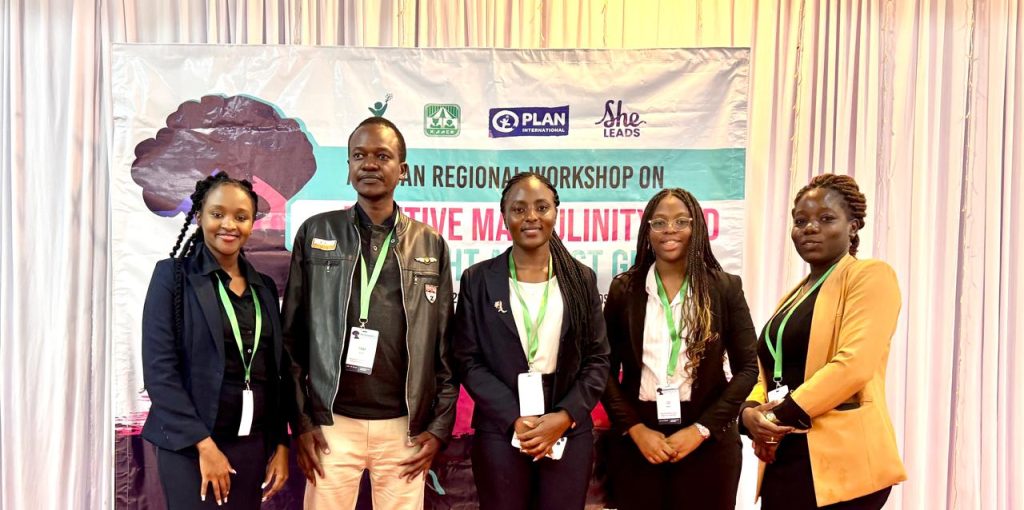
Nairobi, Kenya — As Kenya confronts a disturbing surge in femicide, a coalition of activists, policymakers, and civil society organizations convened on April 22–23, 2025, in Nairobi for a two-day regional workshop focused on promoting positive masculinity and combating gender-based violence (GBV). The African Center for Health, Climate and Gender Justice Alliance (ACHCGA), in partnership with Plan International, UN Women, FEMNET, Equality Now, and She Leads Kenya, launched a powerful platform to ignite transformational change. This groundbreaking event empowered girls and young women to challenge gender-based violence (GBV) at its core and dismantle harmful gender norms from the ground up. The urgency of the gathering was underscored by recent statistics: over 100 women were killed in Kenya in the first three months of 2025 alone, with March recording the highest number of female homicide cases at 44, followed by January with 43 and February with 42. These figures reflect a broader trend, with at least 170 women killed in 2024, the highest annual toll on record. The participants at the workshop emphasized the concept of positive masculinity, which challenges traditional notions of male dominance and aggression. Instead, it promotes values such as empathy, respect, accountability, and care. By engaging men allies, the initiative seeks to dismantle the power structures that enable GBV. The workshop also addressed the importance of digital safety, policy advocacy, and transformative leadership in the fight against GBV. Discussions highlighted the need for comprehensive strategies that encompass homes, parliaments, schools, and online spaces. The event concluded with a call to action: to transform collective pain into power by building skills, forging alliances, and developing actionable strategies to dismantle toxic masculinity, promote gender justice, and advocate for the ratification of the AU Convention on Ending Violence Against Women and Girls (EVAWG). As Kenya continues to grapple with this national emergency, the workshop represents a critical step toward creating safer, more inclusive societies. Through fostering positive masculinity and empowering women and girls, advocates hope to stem the tide of femicide and build a future rooted in equality and respect.

Redefining Positive Masculinity to Combat Gender-Based Violence Read More »

Emmanuel Lekishon Leteipa: A Legacy of Vision, Leadership, and Impact

In the corridors of climate justice advocacy, agricultural sustainability, and community development, the name Emmanuel Lekishon Leteipa will forever resonate as a beacon of hope, resilience, and transformative leadership. His untimely departure has left a void, but his legacy remains a powerful testament to the change one individual can ignite.   A Visionary Ahead of His Time Emmanuel was not just a leader; he was a force of nature undaunted, passionate, and deeply committed to the causes that defined his life. As a youthful climate justice advocate, he championed youth inclusion in climate change, gender justice, and equitable health policies, long before these became mainstream priorities. He understood that the voices of young people were not just important but necessary in shaping a sustainable future. His advocacy was never performative; it was rooted in action, engagement, and policy-driven solutions.   A Leader Who Built Foundations for Change With a strong background in financial management and organizational leadership, Emmanuel was instrumental in steering key decisions on finance, budgeting, and fundraising. He had an unwavering commitment to ensuring financial integrity and sustainability, understanding that without strong financial structures, even the most noble visions could falter.   As a co-founder of the African Center for Health, Climate & Gender Justice Alliance (ACHCGA) alongside Imali Ngusale, Emmanuel laid the groundwork for an institution that is set to outlive him and continue shaping policies, empowering communities, and advocating for justice. He was not only a leader but a mentor, guiding new staff and fostering a culture of excellence and dedication within ACHCGA.   A Champion for Sustainable Livelihoods Emmanuel’s work was deeply committed to seeing communities thrive in a world that often marginalizes them. He believed that sustainability was not just an environmental concern but a socioeconomic imperative. Whether it was through advocating for climate-resilient agriculture, promoting equitable access to healthcare, or ensuring gender justice in policymaking, Emmanuel’s vision always centered around the people most affected by these challenges.   More Than a Leader—A Friend, A Father, A Legacy Beyond his professional achievements, Emmanuel was a warm, compassionate, and deeply principled individual. He was a father, a friend, and a mentor to many. His kindness, wisdom, and unrelenting belief in the power of collective action will be sorely missed but never forgotten. In remembering Emmanuel, we are reminded that true leadership is not about titles but about impact. His work, his vision, and his unyielding commitment to justice will continue to inspire generations to come. Rest in power, Emmanuel. Your legacy lives on   If you would like to contribute to his send-off please send your support to * +254798944654.*Dominic Lekishon Nampaso.  

Emmanuel Lekishon Leteipa: A Legacy of Vision, Leadership, and Impact Read More »