Climate

From Brasília to Belém: Why COP30 Must Center Rights, Resilience & Reproductive Justice in the Climate AgendaGlobal Sympossium ahead of COP 30

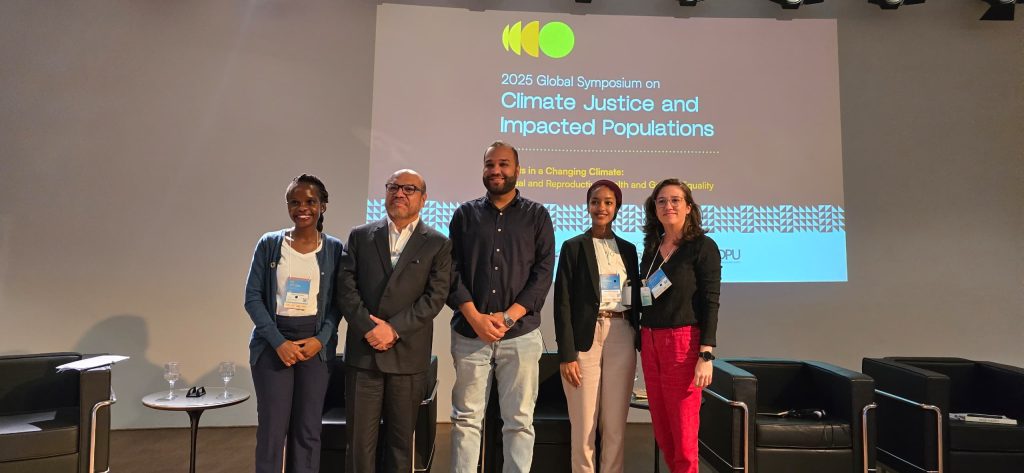
Brasília, Brazil — From July 28 to 31, the 2025 Global Symposium on Climate Justice and Impacted Populations convened in Brazil’s capital, setting the stage for urgent dialogue ahead of COP30 in Belém. In attendance were government delegates, civil society representatives, economists, and climate and gender experts from the Bahamas, Bangladesh, Brazil, Colombia, Ethiopia, India, Italy, Kenya, Malawi, Nigeria, Panama, Philippines, Sierra Leone, South Africa, South Sudan, Sri Lanka, the United States, Zimbabwe, and beyond. Some netizens zoomed into the symposium. Imali Ngusale the lead strategist at the African Center for Health, Climate & Gender Justice Alliance (ACHCGA)  moderated a session on Social Protection, Alternative Livelihoods, and Climate Resilience. Speaking during the session, Hugo Rolando Nopo Aguilar, Senior Economist at the World Bank, emphasized the urgency of the moment:, “Brazil is one of the countries most prone to natural disasters,” he noted, “and the time to strengthen resilience is now.”Accordingly, Mohamed Ageez, Youth Participation Officer, UNFPA ASRO, stated that climate change remains the most significant environmental challenge of our era.” Ageez admitted that climate change disproportionately impacts those least responsible for it, citing that women and girls, particularly in low-income nations, face heightened risks from extreme weather events.” Accordingly, Augustus Lito M. Narag, EnP, Officer In Charge, Director for Mindanao Affairs and Concurrent Director for Data Management and Systems, Pantawid Pamilyang Pilipino Program (4Ps) on Conditional Cash Transfer in the Philippines, made a presentation that revealed that gender-based violence is exacerbated by climate change. Narag, also said that climate change disrupts access to sexual and reproductive health services and deepens economic inequities. Markedly, participants from Brasília, policymakers, climate scientists, health experts, youth leaders, and civil society activists who attended the session admitted that climate action needs to prioritize human rights and resilience. While addressing a panel on Social Protection, Thais Lemos Ribeiro, Coordinator of Education in Human Rights and the Environment at the Ministry of Human Rights and Citizenship, said that “Climate change is not just an environmental crisis, it’s a human rights crisis.” Ribeiro insisted that while many discussions focus mainly on combating climate change, the dignity, health, and choices of millions, especially women and young people, need to be prioritized.” Notably, Bothaina Eltigani, a PhD student at Oxford University, said that “We are responsible for ensuring their voices drive the solutions.” Eltigani underscored that climate solutions should not just be regurgitated in summits but implemented in grassroots places. The symposium was a strategic milestone on the road to COP30, which also comes three decades after the landmark International Conference on Population and Development (ICPD) and the UN Framework Convention on Climate Change. The symposium builds on the 2030 Agenda for Sustainable Development, emphasizing that climate justice must uphold sexual and reproductive health, combat gender-based violence, and dismantle harmful practices. Whether all the aforementioned will explore gaps in research, showcase rights-based adaptation strategies, and push for stronger partnerships to finance climate-resilient health systems will only be told in the sands of time.

From Brasília to Belém: Why COP30 Must Center Rights, Resilience & Reproductive Justice in the Climate AgendaGlobal Sympossium ahead of COP 30 Read More »

ACHCGA’s Impact on Nationally Determined Contributions (NDCs)

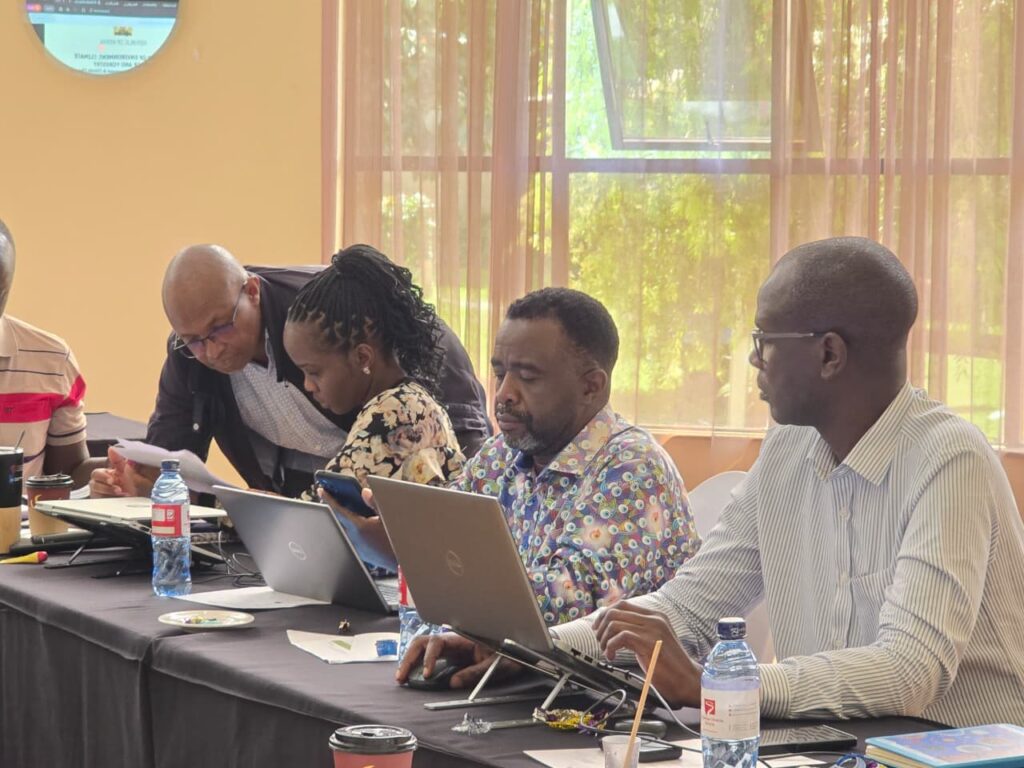
At the sunset of 2024, the African Center for Health, Climate & Gender Justice Alliance (ACHCGA), in close collaboration with UNDP, UNFPA, and the Ministry of Environment and Forestry, took a bold step in advancing youth participation in climate action. Through a strategic initiative focused on Nationally Determined Contributions (NDCs), ACHCGA contributed to a transformative workshop held in the Lake Victoria region for youth climate leaders. Additionally, ACHCGA highlighted the youth and children-specific targets for Kenya’s new Nationally Determined Contribution and Loss and Damage Fund. The workshop served as a platform for knowledge exchange, solution-oriented discussions, and capacity-building in climate action planning. Speaking during the NDC review session in Kisumu, James Thonjo, Senior Government Official from the Ministry of Environment and Forestry, said, “The workshop reinforced the critical role that young people, including myself, play in advancing climate solutions. The connections I made and the skills I acquired will serve as catalysts for more collaborative and effective youth-led climate action.” James insisted that, “Including youth and partners such as ACHCGA is critical to have diversity.” He also stated, “It is great that ACHCGA advocated to have health as one of the priorities in the NDC.” Accordingly, Brian Mounde, a Senior Climate Change Officer from the Ministry of Environment and Forestry, stated, “Youth engagement on NDCs is critical because it ensures the government fulfills the targets of the NCCAP.” Mounde also stated that the Ministry of Environment and Forestry remains committed to strengthening youth participation in climate action to ensure inclusive and effective policy implementation. “I connected with like-minded young climate leaders from youth-led institutions like ACHCGA and I hope that the youth have invaluable insights into climate change policy frameworks.” Additionally, Rosebell Barbara from ACHCGA said, “Attending the Youth Climate Finance and NDC 2.0 Engagement Workshop was an incredible opportunity. I connected with like-minded young climate leaders, gained invaluable insights into climate finance, and developed practical skills to design bankable proposals for climate projects.” The NDC review workshop in Kenya was timely because it served as a platform for knowledge exchange, solution-oriented discussions, and capacity-building in climate action planning. It also underscored the power of youth-driven innovation, with participants presenting groundbreaking local solutions, including: Beyond these innovations, the workshop provided participants with a deep understanding of critical climate finance concepts, including: The Ministry of Environment and Forestry’s unwavering commitment to empowering young climate leaders and support from UNFPA, UNICEF, and UNDP made meaningful youth engagement in NDCs possible. This collaboration ensures that youth are not just beneficiaries of climate policies but active contributors to shaping a sustainable and resilient future.

ACHCGA’s Impact on Nationally Determined Contributions (NDCs) Read More »

COP29: A Missed Opportunity for Climate Justice

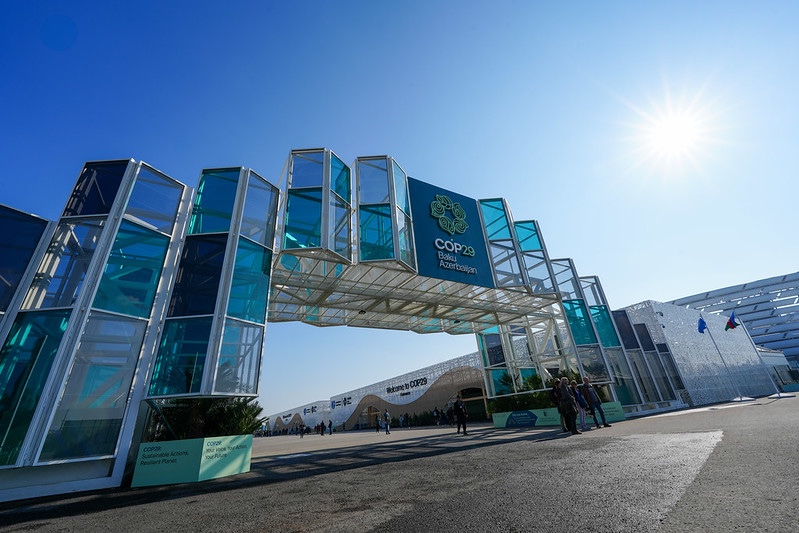
  The 29th United Nations Climate Change Conference (COP29) in Baku, Azerbaijan, unfolded as a harsh reminder of the global North’s persistent neglect of the Global South’s demands for climate equity and justice. While vulnerable communities from the global south face the devastating consequences of climate inaction, the architects of the crisis developed nations continue to prioritize profits over people. At COP29, the African Center for Health, Climate & Gender Justice Alliance (ACHCGA) joined the Women and Gender Constituency and global advocates in demanding urgent action to cap global warming at 1.5°C, unlock meaningful climate finance for loss and damage, and ensure feminist climate justice. Instead, we encountered dangerous distractions, empty promises, and a betrayal of trust.   Small Wins Amidst Broken Promises Carbon Markets: Progress was made in operationalizing Article 6 of the Paris Agreement, particularly mechanisms to improve transparency and accessibility. However, loopholes remain, threatening to undermine the equitable distribution of carbon credits. Climate Finance: A new climate finance deal was announced, aiming for $300 billion annually by 2035. While a step forward the inclusion of private financing sparked concerns about accountability and the marginalization of vulnerable communities.   Disappointments That Can’t Be Ignored Loss and Damage Fund: Rule 16 outcomes fell short of expectations, with major emitters resisting accountability for their historical emissions. Fossil Fuel Phase-out: Despite dire warnings from scientists, weak language dominated the discussions on fossil fuel phase-outs, leaving the door open for continued reliance on dirty energy. Climate Finance Shortfall: The promised $100 billion annual commitment remains unfulfilled, compounding the Global South’s struggle to address loss and damage. UNEP and IPCC reports underline the catastrophic consequences of this inaction, yet no significant steps were taken.   A Bleak Future Without Bold Action The lack of urgency and ambition at COP29 casts a shadow over our collective future. Climate finance continues to fall short, the fossil fuel industry remains unchecked, and the voices of marginalized communities are drowned out by the rhetoric of green capitalism. But hope is not lost. ACHCGA remains steadfast in pushing for climate and gender justice. At COP29, we witnessed the undeniable power of youth, women, and indigenous communities coming together to demand meaningful action.   What’s Next? Building a Just Future COP29 may have betrayed our trust, but it also reignited our resolve. We commit to advocating for a future where climate justice is inseparable from gender justice. 💪🌿 Click here https://x.com/ACHCGJA_Africa/status/1860584558590116066 to read our social media posts in one thread #ClimateJustice ⚖️ #COP29 #FeministClimateJustice  

COP29: A Missed Opportunity for Climate Justice Read More »