Vincent Ouma

CHREAD Coalition Sparks New Appetite for Budget Advocacy

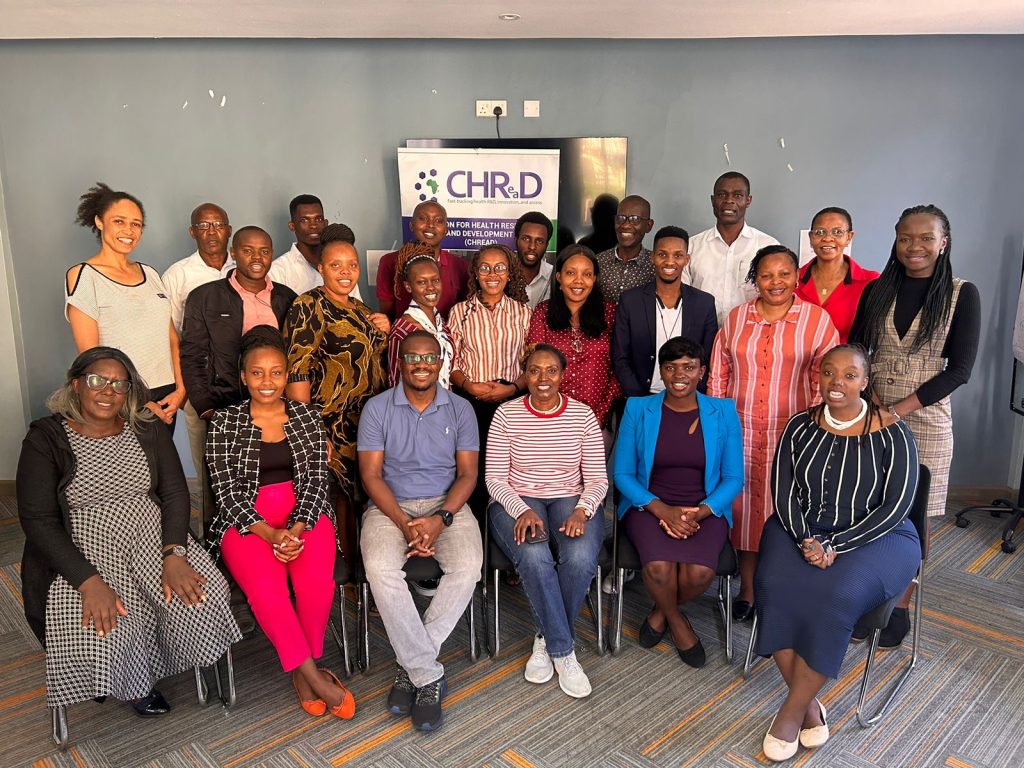
The Coalition for Health Research and Development’s latest Budget Advocacy Workshop on October 2, 2024, ignited a fresh wave of enthusiasm for understanding and influencing Kenya’s fiscal policies. The meeting was held in Machakos and attracted participants from nternational AIDS Vaccine Initiative (IAVI), National Organization of Peer Educators (NOPE), the African Center For Health, Climate & Gender Justice Alliance (ACHCGA), Amref Health Africa , Bajeri Huband other organizations. For 3 days the health experts from the coalition discussed the 2024 Budget Policy Statement (BPS), highlighting the government’s revenue projections, spending priorities, and the far-reaching implications for health, infrastructure, and agriculture. Speaking during the meeting, Mary Muia from the ational Organization of Peer Educators (NOPE) made welcome remarks. She said, “Budget advocacy is a game changer for the CHReaD coalition.” Muia also said that advocating for research and development is quintessential because it helps health researchers to have a better view of the  Budget Policy Statements(BPS), government revenue projections, spending priorities, and their potential impact on health systems and infrastructure. Accordingly, Samuel Makau, the Coalition for Health Research and Development (CHREAD) coordinator, emphasized the importance of health experts comprehending Kenya’s budgeting process to effectively advocate for Research and Development.   With the same  breadth, the Advocacy, Policy, and Communications (APC) Associate Catriona Mumuli said,” The workshop is so timely because it will help  Research experts appreciate the advocacy process in Key.” Catriona Mumuli  also emphasized  that the times are changing and it would be critical for Kenya to  increase budgeting for research and development.” Additionally, Maureen Awour from AMREF Health Africa  insisted that” Understanding the budget for research and Development remains essential. The global health and Research lead also emphasized that  Kenya should endeavor to meet the requirements of the Abuja declaration. Despite this renewed optimism on Research and Development, Imali Ngusale, the Technical Lead from the African Center For Health, Climate & Gender Justice Alliance (ACHCGA)  flagged concerns that highlighted potential risks that could impede health milestones if research is not considered as a priority. Ngusale said,” CHREAD’s focus on healthcare advocacy should prioritize budget allocations for the upcoming FY2025/26.” Accordingly, Abraham Otieno from Bajetu Hub said that the budget process in Kenya is a cyclic process and the coalition’s inclusive approach needs to be intentional to shape the budget allocation process. The  CHREAD coalition  continues to fuel her new appetite for budget advocacy. The collective efforts and promises made by various stakeholders to enhance accountability, ensure public participation, and create fiscal policies that truly serve the people will likely catalyze a significant increase in Research and Development (R&D) investments in Kenya.

CHREAD Coalition Sparks New Appetite for Budget Advocacy Read More »

UNFPA Mombasa

MOMBASA, Kenya – In the face of unprecedented climate upheaval, Kenya finds herself at a crossroads. The East African nation, long a beacon of stability, is confronting the harsh realities of a rapidly changing environment. Driven by a sense of urgency, the United Nations Population Fund (UNFPA) Kenya has taken a bold step and has brought together a diverse group of stakeholders for a critical summit. This meeting of experts, policymakers, and community leaders aims to chart a course for Kenya’s future, navigating the treacherous terrain of climate change. The impact of climate change disrupts development, households, and livelihood, therefore calling for climate adaptation measures need to be included in SRHR. UNFPA champions access to SRHR services and commodities. Climate change has negatively impacted maternal nutrition and access to water by increasing gender inequalities. This workshop has been an opportunity for different sectors to come together and analyze how climate change has disrupted it, and how best they can work together in collective solutions in mitigation and adaptation. It has also been a safe space for discussing the importance of data in developing resilient health in the aspect of climate change impacts on health and gender justice. Humanitarian response agencies need to address the risk information and reporting gap. The experts have underscored the effect that climate change has caused to the lives of people majorly affecting women and girls. This clearly shows the interlink between climate change, health, SRHR, and Gender-Based Violence. UNFPA is very keen on addressing Gender Based Violence more so in humanitarian crises, where women and children are majorly affected, it’s doing what is possible including involving international climate change experts to train youths, government departments, and civil societies to have sufficient knowledge on climate change impacts and possible solutions that can be done. There is an importance in building resilient health in societies, as land degradation, floods, and droughts bring in more malaria cases, and water-borne diseases and disrupt the medicine transportation system, which fails to reach to last mine deliveries. For climate change impacts and SRHR challenges to be addressed, there is an importance in involving youths in the delivery. Youths be treated as partners not just to be spectators of the process.  

UNFPA Mombasa Read More »